Residential hydro jetting for kitchen lines, main drains, and sewer lines that keep clogging, from a family-owned plumbing company in China Grove.
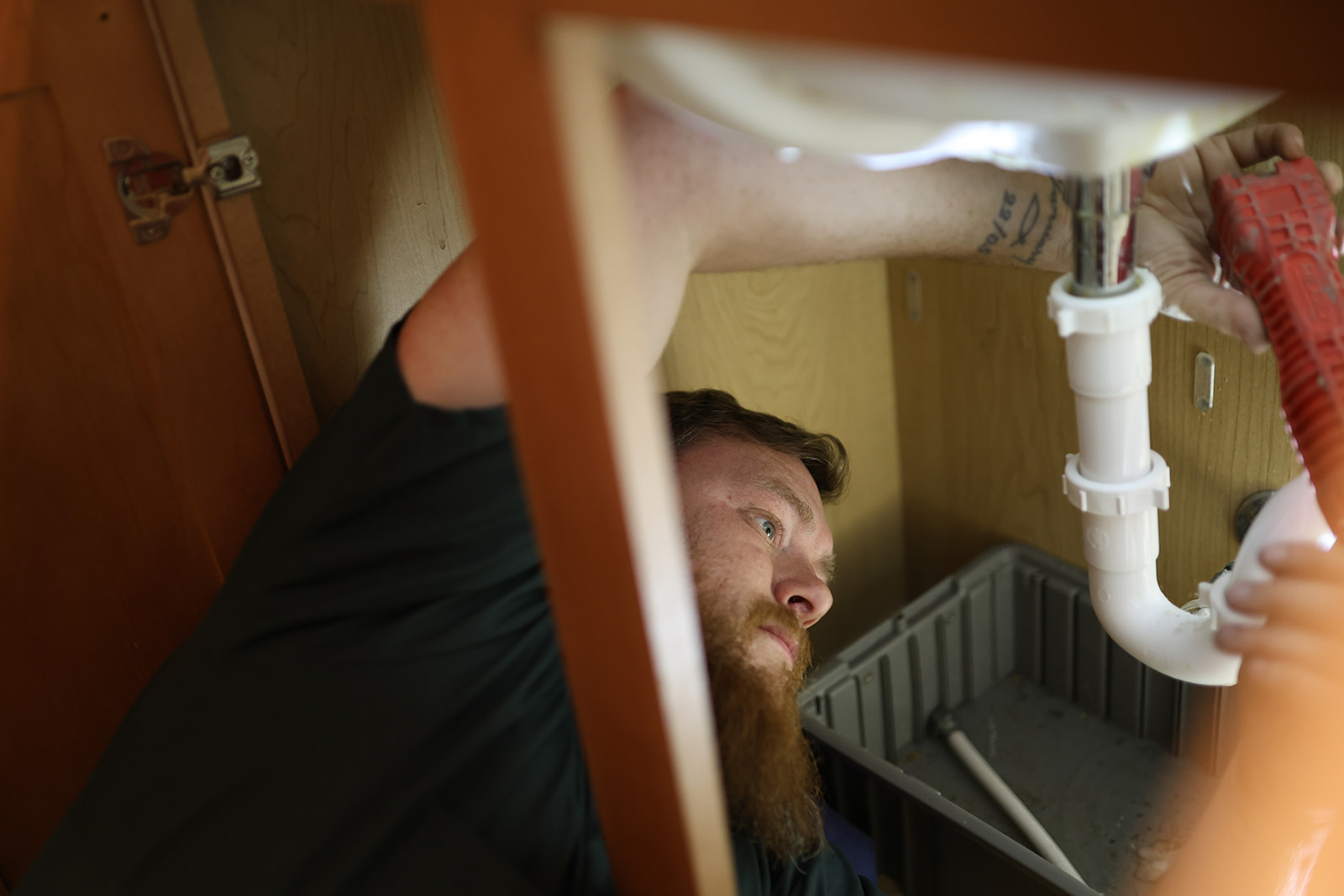
Most clogs only need a hole punched through them. Some lines need more than that. When a drain clogs again a few weeks after it was cleared, when the kitchen sink backs up every holiday, or when the cable keeps coming back with roots, the problem isn't one blockage. It's what has built up along the inside of the pipe.
Hydro jetting cleans that buildup off the pipe wall with high-pressure water and flushes it down the line. We added a hydro jetter to the cable machines and sewer camera we already carry, so the tool fits the problem instead of the other way around. The person who looks at your line and quotes the job is the person who does the work. There's no salesman and no handoff. We work on homes only, across Rowan, Cabarrus, and southern Iredell Counties.
If you want the side-by-side on how a cable and a jetter work differently, our Concord drain cleaning page walks through it. This page is about when jetting is worth it, what a visit looks like, and how to keep a problem line from turning into a Saturday emergency.
We reach for the jetter when the evidence points to buildup or a repeating problem, not just because it's on the truck. The usual reasons:

Jetting is very good at cleaning. Grease, soap scum, sludge, sand and silt, wipes that have knitted together, and thin roots all come off the wall and wash down the line.
What jetting can't do is repair the pipe. A cracked section, a joint that has shifted out of line, a low spot that holds water, or a line that has started to collapse will still be there after the cleaning. A clean line with one of those problems may run well for a while, then start collecting debris again at the same spot. That's why we tell you what we found, not just that the water is moving.
A lot of homes in our area still have original cast iron or clay in the main line, and some lines have already been patched once or twice. Pipe like that can be cleaned, but it should be seen first. We'd rather spend a few minutes with the camera than find out the hard way that a joint was already loose.
What we see decides the plan. A sound line gets jetted. A line with heavy scale or a weak section may get a gentler cleaning, or a cable instead. A line that's failing gets an honest conversation about repair, because cleaning a broken pipe doesn't fix it. When a sewer line does need replacing, we use solid-core PVC, which is more rigid and stronger in the ground than foam-core pipe. Our sewer line repair page covers how that work goes.
Some lines are going to clog again, and you can know that ahead of time. A tree whose roots have found a joint in the sewer line, a kitchen line that collects grease in the same spot, or an older line with a low section that gathers debris will keep doing what they do.
For a line like that, a planned cleaning is often the calmer option. Instead of waiting for the backup that shows up when the house is full of family, you schedule the cleaning on a weekday, at a time that works for you, during regular hours. We base the timing on what came out of the line and what the camera showed, not on a standard calendar. Some homes need it every year or so. Many never need it again after one good cleaning.
Maintenance jetting doesn't replace a repair that's truly needed. But when the pipe itself is sound and the problem is roots or buildup, it can be a reasonable way to manage a line for years, and we'll tell you honestly which situation you're in.
The service call is $94, and it's waived when you move forward with the work. After-hours calls carry a $189 fee. Both are listed on our pricing page. The price of the jetting itself depends on the line, its length, and how it's accessed, and we give you that number before we start. The person quoting the job is the person doing it, so there's no commission riding on what you choose.
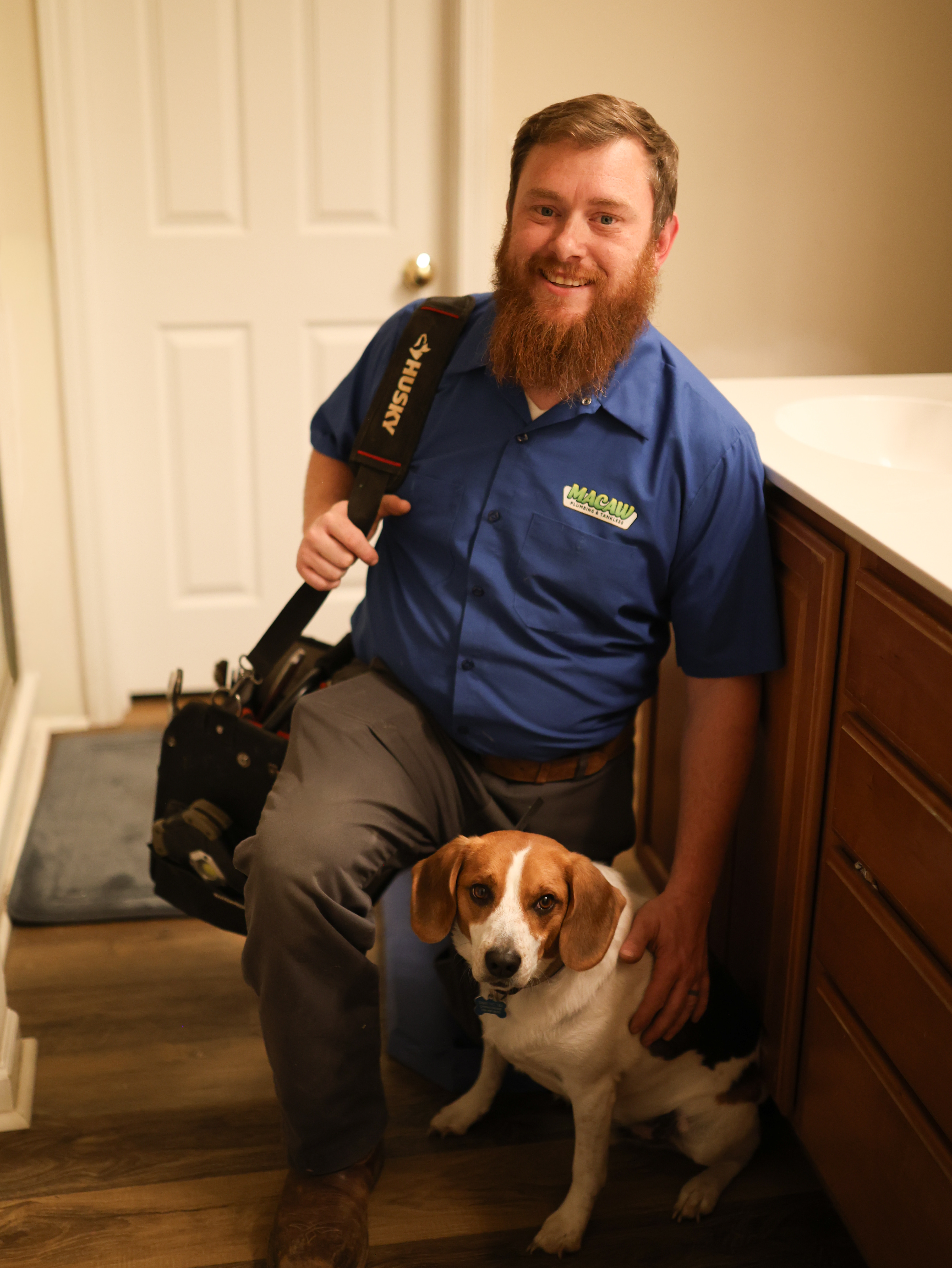
Macaw is based in China Grove and jets residential drain and sewer lines across Rowan, Cabarrus, and southern Iredell Counties. For what drain work looks like in your town:
We don't take commercial drain jobs. Standard hours are Monday through Friday, 8 AM to 5 PM, with emergency calls Monday through Friday from 5 to 10 PM and Saturday from 8 AM to 10 PM. If a line is backing up right now, see emergency plumbing. For everything else drain-related, see our drain cleaning page or check the service area.
There's no set schedule, and most homes don't need routine jetting at all. Lines with a known, repeating cause, such as roots at a joint or a grease-prone kitchen line, can benefit from a planned cleaning. We base the timing on what came out of the line and what the camera showed.
No. Jetting cuts roots back and flushes them out, which gets the line flowing again. Roots grow toward the water and nutrients leaking from a joint, so they'll return over time. The lasting fix is repairing that section of pipe. Until then, periodic jetting keeps the line open.
Often, yes. A camera can't see the pipe wall through grease, sludge, or a root mass. Cleaning first lets the camera show the real condition of the line, which matters when you're deciding whether it needs repair.
Usually there's another way in, but it depends on the house. We'll look at your setup during the service call and explain the access options, and what each involves, before any work starts.
It shouldn't be. The water and loosened debris flush down the line toward the sewer, not back into the house, and the work is usually done from a cleanout. We protect the area we're working in and check every fixture before we leave.
If a drain keeps coming back, or a cable already went down it and didn't hold, call us at (704) 798-2659, email contact@macawplumbing.com, or schedule online. An honest look at the line, a straight number, and the person who quotes the job is the person who does it.

Licensed, family-owned plumbing experts providing honest, reliable service—from water heaters to emergency repairs—across China Grove, Salisbury, Mooresville, Lake Norman, and surrounding North Carolina communities.
Hours:
Monday – Friday (8am – 10pm)
Saturday (emergency plumbing)


