Residential drain cleaning for Mooresville and Lake Norman homes, from lower-level baths and long runs to sewage pump lines.
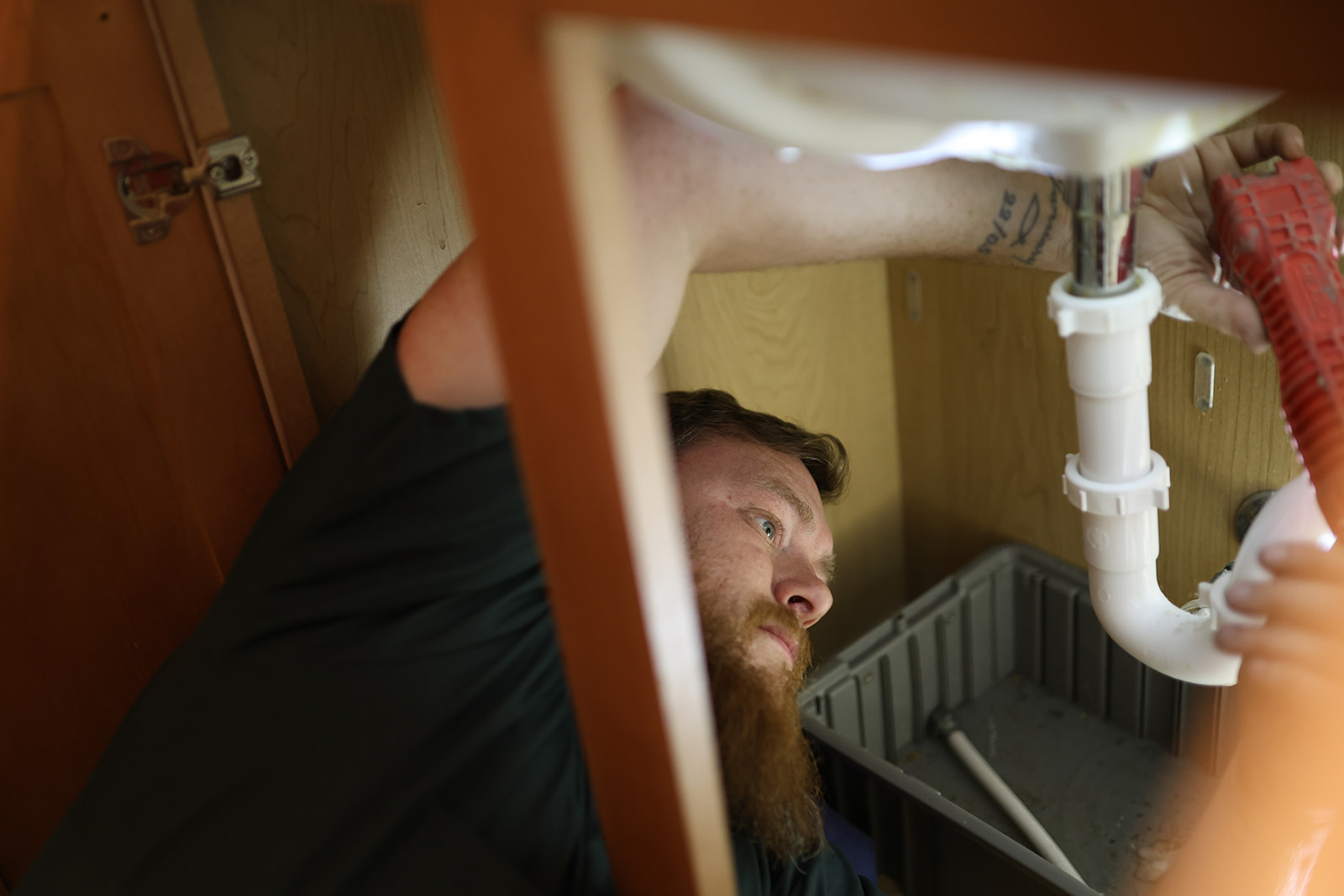
In a lot of Lake Norman houses, drain trouble starts downstairs. The lower-level shower fills with gray water, the basement toilet gurgles when the dishwasher runs, or the pump alarm goes off on a Saturday with a house full of guests. Homes built into a slope drain differently from a one-story ranch, and they clog differently too.
Macaw Plumbing & Tankless handles residential drain cleaning across Mooresville. We're licensed under NC License #L.35944, the P1 Unlimited Plumbers License with Well Seal Certification held by owner Jonathan Johns. On every drain call, we start by working out where the water is actually trying to go. Call (704) 798-2659 or book online.
Drains run on gravity. Every fixture flows downhill into one main line, which carries everything out to the town sewer or a septic system. When the main line clogs, water backs up to the lowest opening it can reach. In a house with a finished lower level, that is usually a basement shower, a floor drain, or a laundry drain, not the kitchen sink where you'd expect to notice it first.
Many lake lots slope down toward the water, so the lower level can end up sitting below the pipe it needs to drain into. Fixtures down there can't rely on gravity alone. They drain into a sealed basin, and a sewage pump (sometimes called an ejector) lifts the waste up into the main line. That adds a pump that can fail and a stretch of pipe that only moves when the pump runs.
Then there's distance. A house set well back on a deep lot, or a lower-level bathroom at the far end of the house from where the line leaves, means a long run of pipe. A longer line has more fittings, more chances for a low spot, and more room for a partial clog to build before anyone notices.

A lower-level backup can be a clog in the main line, a clog in the short pipe between the pump and the main, or a pump that has stopped doing its job. From the basement they look about the same, and the fixes are completely different.
So we work through it in order. Which fixtures are backing up, and do the upstairs drains still run? Is the pump running, humming, or silent? Is the alarm on? What's sitting in the basin? Those answers usually narrow it down before any equipment comes out.
If it's a clog, we clear it with a cable machine or a hydro jetter, depending on what's in the line and how far away it sits. If the clog keeps coming back, or something about the line doesn't add up, we can run a sewer camera to see inside the pipe. That's when the job calls for it, not every visit. If the pump is the problem, our sewage pump service covers repair and replacement. And if the water in your lower level is groundwater coming in rather than drains backing up, that's a different system and a sump pump question.
A clean, draining line is a good result, and usually where the visit ends. We only bring up sewer line repair when the camera shows a pipe that's broken, sagging, or packed with roots past the point where cleaning helps. When a section does need replacing, we use solid-core PVC, which is stiffer and stronger than the cheaper foam-core pipe. Either way, the person who quotes the job is the person who does it.
A pump basin collects everything the lower level sends it, and some of that doesn't pump well. Wipes are the most common culprit. Even the ones sold as flushable don't break apart the way toilet paper does, and they can wrap around a pump or wad up in the pipe it pushes into. If guests use the downstairs bath, a small note by the toilet helps.
Grease is the other one. The Town of Mooresville's fats, oils, and grease guidance makes the point that a garbage disposal only shreds grease into smaller pieces, and that detergents and additives push it farther down the line instead of getting rid of it. In a house with a lower-level kitchen or wet bar draining to a pump, that grease can collect in the basin and coat the float switch that tells the pump when to run.
Second homes, rentals, and lower levels that only fill up when family visits share one weak spot: drains that sit dry.
Every drain has a trap, a bend in the pipe that holds a little water to keep sewer gas from coming back into the house. Leave a basement shower or floor drain unused long enough and that water evaporates. The smell that greets you on the first weekend back is often a dry trap, not a clog. Running water in each lower-level drain for a minute refills it.
A pump that has sat idle for months can also be slow to start. Before company arrives, run some water downstairs and listen for the pump to cycle. Better to find out on a Thursday than a Saturday night.
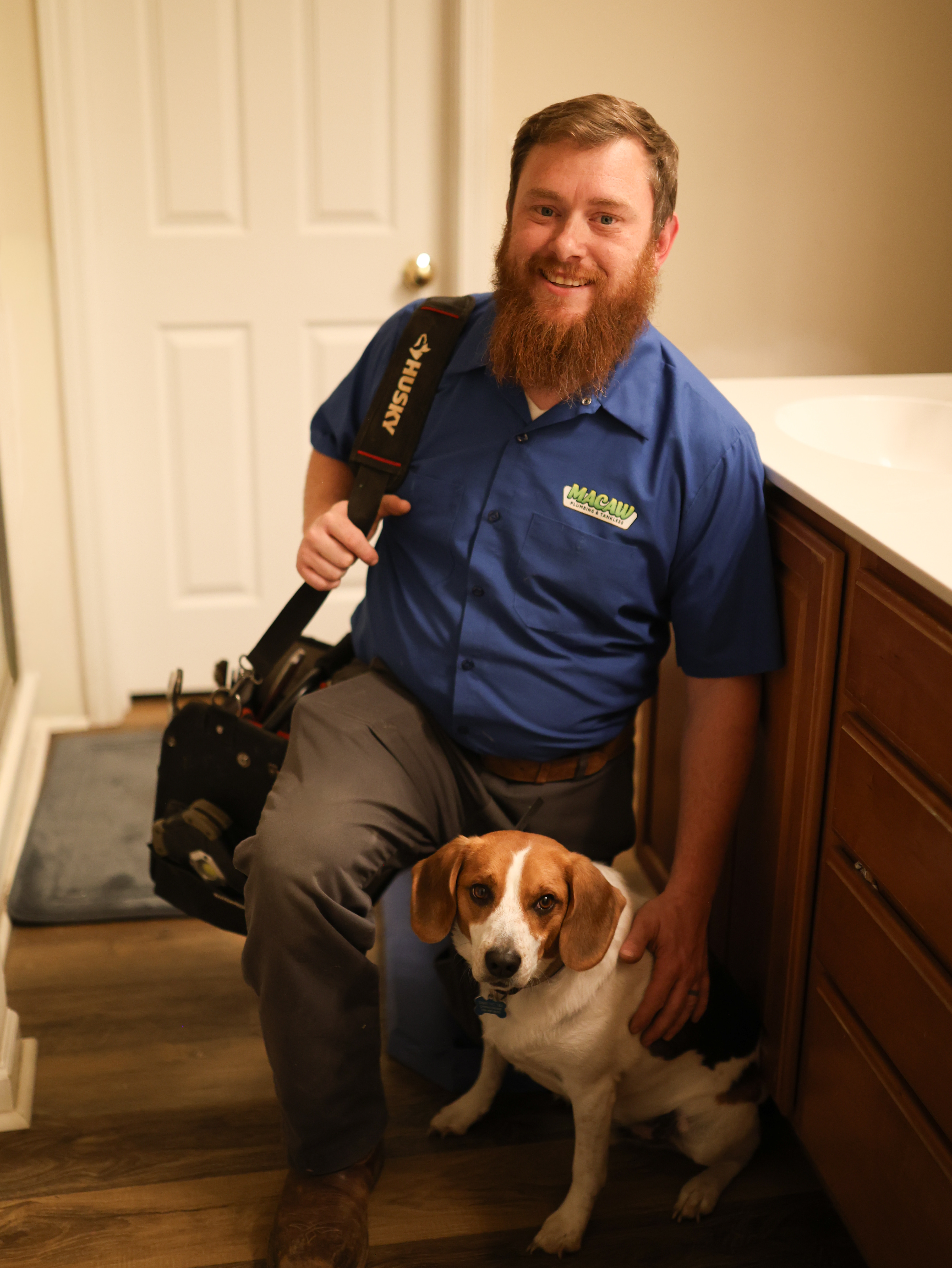
We clean drains for homeowners throughout Mooresville, including the 28115 and 28117 ZIP codes, and nearby in Troutman, Davidson, and Cornelius. Davidson and Cornelius sit at the western edge of our service area, so we schedule those visits ahead rather than squeezing them in. Our drain work is residential only. The $94 service call covers the visit and the diagnosis and is waived when the work goes ahead; details are on our pricing page.
For everything else we handle in town, see our Mooresville plumber page. The general process is on our drain cleaning page, and our Concord sewer line page explains where your line ends and the public sewer begins.
It can be either. The alarm means the water in the basin has risen higher than it should. That happens when the pump has failed, when its float switch is stuck, or when the pump runs but can't push water through a clogged line. Silencing the alarm is fine, but stop using the lower-level fixtures until someone has looked at it.
Often it isn't. Drains that go unused for weeks can lose the water in their traps, and that water is what keeps sewer gas out of the house. Run water in every lower-level sink, shower, and floor drain for a minute. If the smell fades, it was a dry trap. If it doesn't, or the drains are slow, call us and we'll take a look.
If your lower level has a bathroom or laundry, look for a sealed lid set into the floor, often in a closet or utility room, with a pipe and an electrical cord coming out of it. That's usually a sewage basin. A sump pit, which handles groundwater, can look similar. If you're not sure which you have, we can show you on the visit.
If sewage is coming up into the house, treat it like one. Stop running water anywhere in the house so you don't add to it. We take emergency calls Monday through Friday from 5 to 10 PM and Saturday from 8 AM to 10 PM. Calls after 7 PM and on Saturdays carry a $189 after-hours fee on top of the service call; details are on our pricing page. We don't offer overnight or Sunday service, so outside those hours, keep water use to a minimum and call when we open.
If a lower-level drain is backing up, a pump alarm won't quiet down, or the same clog keeps coming back, call us at (704) 798-2659 or book online. You'll get an honest diagnosis and a straight answer about whether anything else needs attention.
Hours: Monday–Friday, 8 AM–5 PM. Emergency calls Monday–Friday 5–10 PM and Saturday 8 AM–10 PM. No overnight or Sunday service.

Licensed, family-owned plumbing experts providing honest, reliable service—from water heaters to emergency repairs—across China Grove, Salisbury, Mooresville, Lake Norman, and surrounding North Carolina communities.
Hours:
Monday – Friday (8am – 10pm)
Saturday (emergency plumbing)


