October 2, 2026
Reviewed & Published by:
Jon Johns
If you're on a well in Rowan County, you've probably heard some version of the same question: should I be worried about the coal ash?
It's a fair question, and it has a real answer. Two Duke Energy coal ash sites sit inside the area we serve — Buck Steam Station near Salisbury, and Marshall Steam Station on Lake Norman. Both have been in the news over the past decade, both have been under state cleanup orders, and both have left homeowners wondering what any of it means for the water coming out of their own tap.
Here's the short version, and it's more reassuring than most of what you'll read: the ash at Buck has been dug up and hauled off, the homes that were affected were connected to city water years ago, and Marshall is being excavated ahead of schedule. If you're on municipal water anywhere in our service area, this was never your issue to begin with.
If you're on a private well, the honest answer is that you should know what's in your water — but that's true regardless of coal ash, and it has been true the whole time.
Buck Steam Station sits on the Yadkin River in Rowan County, just outside Salisbury. Like most coal plants of its era, it stored the ash left over from burning coal in unlined basins — essentially large ponds, with no barrier between the ash and the ground underneath.
Coal ash carries the elements that were in the coal to begin with. Boron, chromium, iron, manganese, sulfate, and a handful of others. In an unlined basin, those can move into groundwater.
At Buck, they did. Duke Energy has reported hundreds of exceedances of North Carolina groundwater standards at the site since 2008. In 2015, the state sent letters to roughly twenty households near the plant advising them not to drink their well water. Several of those letters cited vanadium, an element that occurs naturally in coal.
That's the part most people remember, and it's the part that tends to get repeated without the rest of the story.
The cleanup that followed is the part that rarely makes it into a headline.
North Carolina's Coal Ash Management Act required Duke Energy to provide a permanent alternative water supply to affected neighbors. Near Buck, that meant extending a municipal water line to those homes. The households that received do-not-drink letters were taken off the wells in question and connected to treated city water.
A 2016 court settlement then required full excavation at Buck. The ash didn't get capped and left in place — it was dug out. Duke has since operated a recycling unit at the site that processes hundreds of thousands of tons of ash a year into material used for concrete. In 2020, the company agreed to close every remaining coal ash basin in the state.
So when someone asks whether the Buck situation is ongoing: the basins are gone, and the people who were affected have been on a different water source for years.
Marshall sits on Lake Norman in Catawba County, across the water from the Mooresville and Davidson side we work in every week.
Marshall's basin is also being excavated, and it's a much larger job. As of the end of 2023, roughly 3.3 million tons had been removed out of about 17 million total, with the ash moving into a lined landfill on the plant site rather than being trucked through the region. State law sets a December 2035 deadline, and Duke has reported running ahead of it.
That's a long timeline, and it's reasonable to ask what it means in the meantime. Two things are worth knowing:
Lake Norman is not a drinking water source you draw from directly. If you live on the lake, your household water is almost certainly municipal — treated, tested, and reported on annually by your utility. Lake water quality and your tap water are two different questions.
Excavation into a lined landfill is the outcome the state was after. The unlined basin is the thing that allowed movement into groundwater. Moving the ash into a lined, monitored facility is the fix, not a new risk.
You can follow the status of either site directly through the state rather than taking anyone's summary for it. The NC Department of Environmental Quality's coal ash excavation program publishes facility-by-facility updates, permits, and monitoring data for Buck, Marshall, and every other site in the state.
Want to learn more about your options? Give us a call to chat with a friendly guide.
.svg)
Here's how we'd actually walk through it with a homeowner on the phone.
If you're on city water — Concord, Kannapolis, Salisbury-Rowan, Mooresville, China Grove — this isn't your issue. Your utility treats the water, tests it continuously, and publishes an annual water quality report you can read for free. Coal ash groundwater contamination is a private well concern. It isn't a municipal supply concern in our area.
If you're on a private well and you're more than a mile or two from either site, the odds that coal ash is the explanation for anything you're noticing are low. Groundwater contamination from a basin is a local effect, concentrated near the source. If your water tastes off or is staining fixtures, the far more likely causes are the ordinary ones we see constantly in this area — iron, manganese, hardness, low pH, or hydrogen sulfide.
If you're on a private well close to Buck or Marshall, you're in the group worth being deliberate about. Not alarmed — deliberate. That means testing, which we'd tell you to do anyway.
Nobody tests a private well but the owner. There's no utility behind it, no annual report, no one checking.
North Carolina's public health guidance is to test a private well at least once a year for bacteria and nitrates, and more often if the taste, color, or smell changes, or after flooding. A fuller panel through your county health department or a state-certified lab will cover metals, iron, manganese, hardness, and pH.
For anyone specifically concerned about proximity to a coal ash site, the county health department is the right first call, not a plumber and not a filtration company. They can tell you what's been sampled in your area, what a relevant panel should include, and how to get it done through a certified lab. Rowan, Cabarrus, Iredell, and Catawba counties all run well water programs.
We're saying that plainly because it's the honest order of operations. A test result tells you whether you have a problem and what it is. Without one, anything anybody recommends you install — us included — is a guess.
Jonathan holds a Well Seal Certification, so we work on wells: the pump, the pressure tank, the pressure switch, and the plumbing between the well and your house. That's the part of this a plumber can actually help with.
What we won't do is sell anybody anything off a worry.
If you call us about coal ash and you're on city water, we'll tell you you're fine. If you're on a well and you haven't tested, we'll tell you to call your county health department before you spend a dollar. And if your test comes back clean, that's the end of it. A clean test is a good outcome, not the start of a sales conversation.
If a test does turn something up, the right fix depends entirely on what it found, and it's worth understanding the options before anyone quotes you. Our piece on the difference between a water softener and a water filter walks through what each kind of system does and doesn't handle.
If you're on a well in Rowan, Cabarrus, or Iredell County and something's off with the well itself — low pressure, a short-cycling pump, a pressure tank that won't hold — call Jonathan at (704) 798-2659. For questions about what's in your water, your county health department is the right first call.
No. A 2016 settlement required full excavation at Buck, and Duke Energy has operated a recycling unit at the site that processes the ash into material used for concrete. In 2020 the company agreed to close every remaining coal ash basin in North Carolina.
Yes. Duke reported hundreds of exceedances of state groundwater standards at the site beginning in 2008, and in 2015 the state advised roughly twenty nearby households not to drink their well water. Those homes were subsequently connected to a municipal water line, as required by North Carolina's Coal Ash Management Act.
Lake Norman isn't a source you draw household water from directly — homes in the area are on treated municipal water that's tested and reported on annually. The Marshall basin is being excavated into a lined on-site landfill ahead of a December 2035 state deadline. You can track the status through NC DEQ's coal ash excavation program.
Not unless a test says so. If you're on city water, this isn't a coal ash question at all. If you're on a private well, test through your county health department or a certified lab first — the result determines whether you need anything and what kind. Installing treatment without a test is guesswork.
At least once a year for bacteria and nitrates, and sooner if the taste, color, or smell changes or if you've had flooding. A broader panel covering metals, iron, manganese, hardness, and pH is worth running periodically, and your county health department can tell you what to ask for.
Your county health department. Rowan, Cabarrus, Iredell, and Catawba counties all run well water programs and can tell you what's been sampled locally and how to get a certified test. They're the right first call for anything health-related.
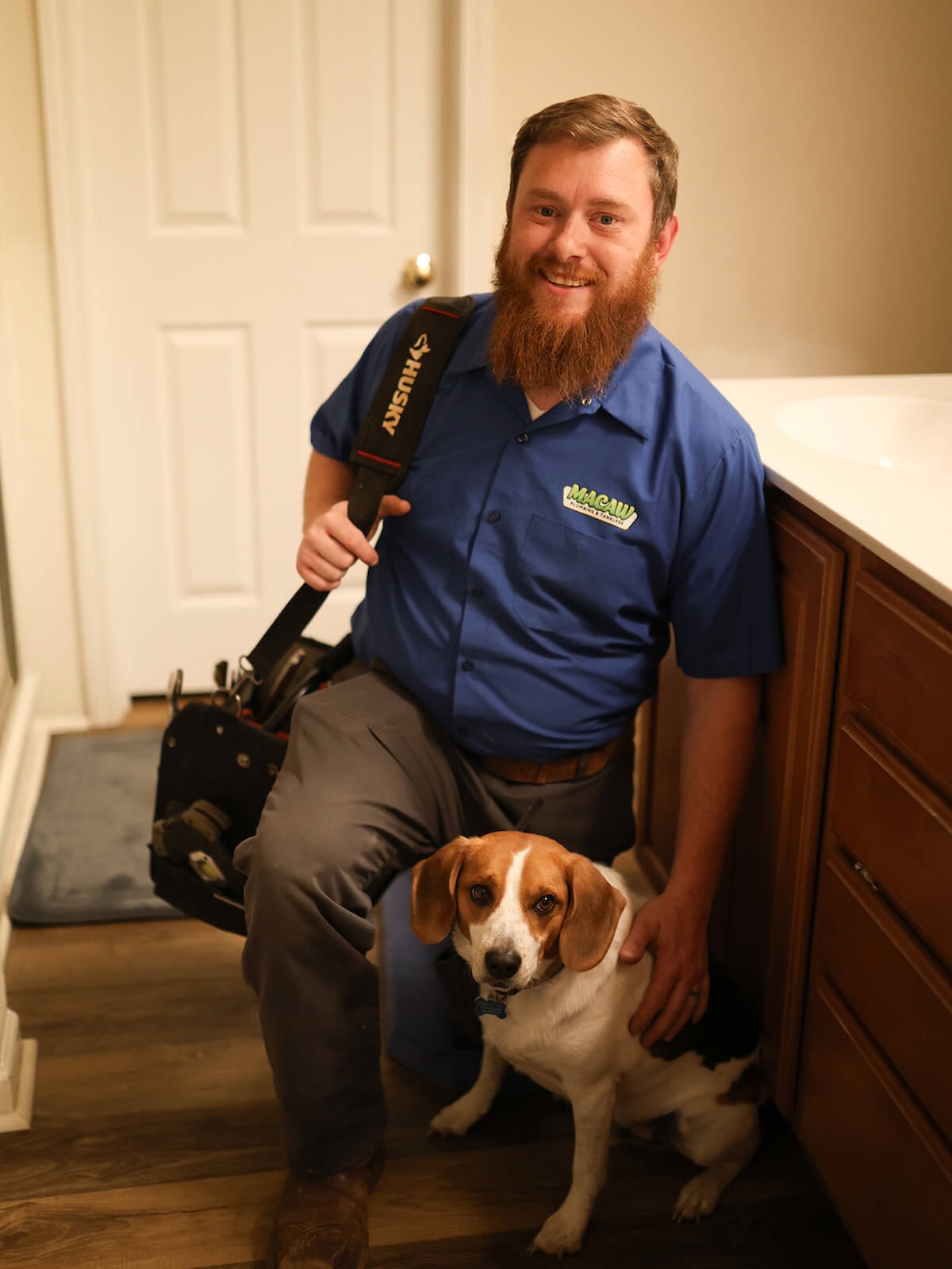
Jonathan Johns is the owner and lead plumber at Macaw Plumbing & Tankless, a family-owned plumbing company serving Salisbury, Mooresville, China Grove, and surrounding communities across Cabarrus, Rowan, and Iredell Counties. He holds NC State License #L.35944 (North Carolina P1 Unlimited Plumbers License) with Well Seal Certification and is a certified Navien Service Specialist.
.webp)
Licensed, family-owned plumbing experts providing honest, reliable service—from water heaters to emergency repairs—across China Grove, Salisbury, Mooresville, Lake Norman, and surrounding North Carolina communities.
Hours:
Monday – Friday (8am – 10pm)
Saturday (emergency plumbing)

.svg)

.svg)

.svg)
